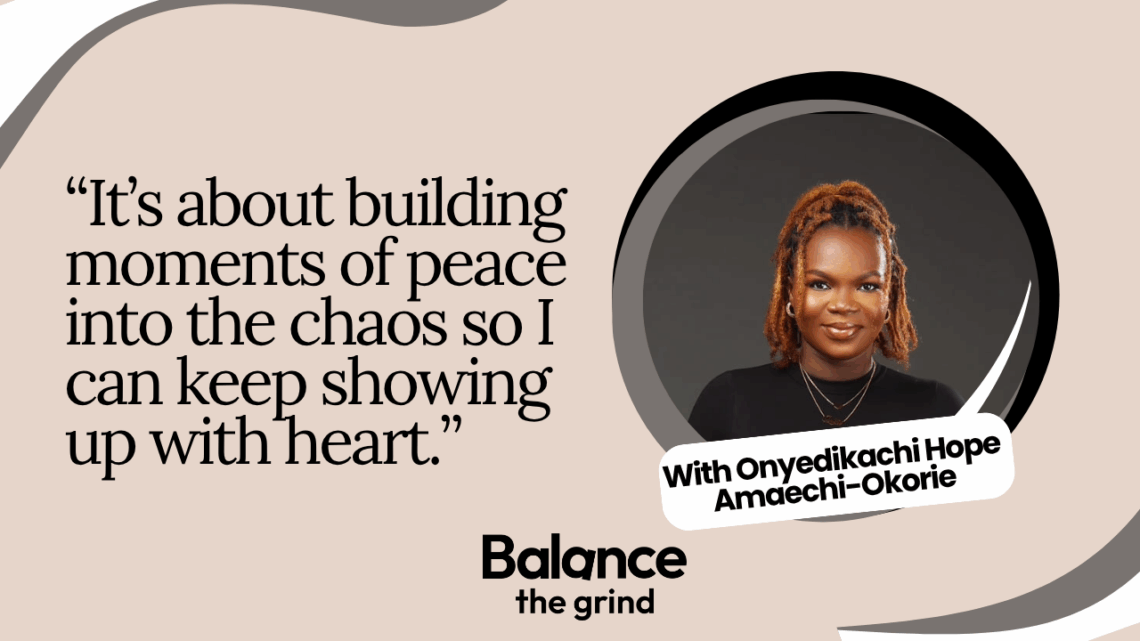

Onyedikachi Hope Amaechi-Okorie is helping reshape the future of tech—one voice at a time. As a program manager, developer advocate, and founder of Spectrum of Speech, Onyedikachi works at the intersection of open-source, accessibility, and speech diversity. Whether she’s guiding new contributors in the JSON Schema community, shaping inclusive AI at Mozilla Common Voice, or building safe spaces for atypical communicators, her work is rooted in one belief: every voice deserves to be heard.
In this conversation, Onyedikachi shares how she balances deeply personal advocacy with high-impact community strategy, why rest is part of the mission, and how starting from lived experience can shape a values-driven career in tech.
How do you usually start your day? Is there a habit or routine that helps you stay centered before diving into your work?
I start my day with silence, just sitting still before the noise begins. No rushing, no notifications, no emails. It’s my way of checking in with myself before the world checks in with me. Then I head to the gym. There’s something the gym does for me. It wakes my mind up in the most beautiful way. I move my body, feel my breath, and let go of any tension I carried from the day before.
By the time I’m done, my thoughts are clearer, my energy is lighter, and I feel like I’ve already accomplished something important. A happy mind makes the dream work, and the gym is my happy place. It’s where I reflect, rehearse ideas, and plan my day with intention.
Sometimes, I’ll even replay conversations in my head that I want to have in my community or imagine how a new initiative could unfold. I’ve solved problems mid-set and journaled ideas right after a workout. It’s not just about fitness. It’s my reset button, my strategy room, and my safe space all rolled into one.
Starting the day this way helps me show up fully, present, grounded, and ready to do meaningful work.
You work at the intersection of tech, accessibility, and community. What does a typical workday look like for you in that space?
Every day feels a bit like puzzle-solving, with people, processes, and purpose at the center.
In the JSON Schema community, my day often starts with thinking about the contributor experience. I’m always asking: How do we make it easier for someone new to feel like they belong here? That means refining onboarding process, streamlining documentation, and advocating for more approachable pathways into the project. But it doesn’t stop there.
Community management in open source is not just about hosting meetings or creating Canva assets (though I do plenty of those too). It’s about designing human-centered systems of belonging. Welcoming contributors, checking in on stale pull requests, translating technical progress into community wins, and making sure people feel seen and valued, not just useful.
Sometimes it’s helping a contributor figure out Git for the first time. Other times it’s strategizing with core maintainers on community roadmaps or mentoring someone through their first open issue. It’s incredibly fulfilling work, and it keeps me grounded in the idea that tech is people first.
With Mozilla Common Voice, my role leans heavily into documentation and accessibility, ensuring that the language we use is inclusive, that contributors from different backgrounds can participate meaningfully, and that the open data we build reflects real-world diversity. It’s a collaborative ecosystem, and I love being part of it.
Then there’s Spectrum of Speech, the community I founded for people with atypical speech patterns. That space is both deeply personal and wildly energizing. My workday often includes moderating conversations, checking in with members, planning podcast episodes, and designing supportive spaces for people who’ve never had the language or confidence to share their stories before.
Sometimes I’m writing blog posts that capture lived experiences. Other times I’m mapping out new ways to talk about speech diversity with nuance and strength, while keeping it rooted in community and joy. We’ve built an active Discord space, launched a new website, and are continuously thinking about how to reimagine the future of voice tech and inclusion.
And sure, it can get overwhelming, but I’m constantly reminded that this work matters. Small acts, like answering a new contributor’s question or hosting a vulnerable conversation, are shaping something bigger. That’s what keeps me going.
You’ve built and led initiatives around speech diversity and inclusive AI. What first drew you to that work, and what keeps you motivated?
For as long as I can remember, I’ve navigated the world with a stutter. And for just as long, I’ve quietly wrestled with the fear that my voice didn’t belong in certain spaces. Whether it was being overlooked in conversations, or feeling left behind by tools that didn’t understand how I spoke, I internalized a belief that fluency was the price of participation.
It’s not just about tech not catching my words. It’s about a world that often doesn’t make space for voices that sound different. So naturally, I’ve been drawn to this work, not just to find my place, but to help build spaces where others don’t have to question if their voice is valid.
That’s what led me to create Spectrum of Speech and also start a stuttering and speech diversity initiative in the Cloud Native Computing Foundation (CNCF) Slack community. I wanted to see what could happen if we opened the door wider. And I was blown away. I heard from people who clutter, people with aphasia, those with cochlear implants or who are hard of hearing and speak with unique rhythms. It was beautiful, so much more than I expected. And I realized this isn’t just about stuttering. It’s about all of us. It’s about honoring the full spectrum of human communication.
That moment became a turning point for me. Speech diversity deserves to be mainstream. People should know these voices exist, that they carry stories and innovations and power. Whether through inclusive AI, better documentation, or community design, we can make room for every voice, not in spite of how they sound, but because of it.
What keeps me going is the feedback I get from people who say, “I’ve never heard anyone talk about this before,” or “This feels like the first time I’ve been able to show up as myself.” That means everything. That’s the fire. Because for every person who still feels invisible or misunderstood because of how they speak, I want them to know they’re not alone, and that their voice matters. We’re changing that narrative, one voice at a time.
Balancing advocacy, program management, and developer relations can be intense. How do you manage your energy and stay focused?
Balancing advocacy, program management, and developer relations can absolutely be intense, but for me, it comes quite naturally because these areas aren’t separate silos, they’re deeply connected by a shared purpose. At the end of the day, it often feels like I’m doing just one thing: building inclusive, human-centered spaces in tech where every voice is heard and valued. Whether I’m shaping community programs, representing underrepresented voices, or engaging developers, it all feeds into the same mission. That alignment gives me clarity and momentum, even when the workload is full.
What helps me stay focused is knowing when to pause, restrategize, or take a step back altogether. I don’t try to power through when something isn’t clicking. Instead, I ask myself core questions like:
- Is this still aligned with the impact I want to make?
- Am I solving the right problem, or just reacting to noise?
- What would make this more sustainable for me and for the community?
- Is this a task I need to own, or can I collaborate or delegate?
- Am I leading from a place of purpose or pressure right now?
These check-ins help me recalibrate without guilt. I’ve learned that rest and reflection are also forms of progress. They create space for better decisions, more intentional impact, and renewed energy.
Because I’m genuinely passionate about this work, it doesn’t feel like I’m juggling disconnected tasks. It feels like I’m nurturing different branches of the same tree. That mindset has helped me avoid burnout and stay grounded in why I started in the first place.
How do you approach rest or recharge time when your work is deeply mission-driven?
When your work is mission-driven, rest isn’t always easy. The lines blur, especially when the mission is personal. For me, advocating for speech diversity, managing technical communities, and building inclusive spaces aren’t just jobs; they’re tied to who I am. It’s work I deeply care about, and that makes it both incredibly fulfilling and sometimes hard to step away from.
But over time, I’ve come to understand that rest is part of the mission. I’ve learned to treat rest not as a reward but as a responsibility, because sustainable impact requires a sustainable me.
I approach rest by building in intentional pauses. I check in with myself regularly and ask:
- Am I doing this out of alignment or out of urgency?
- Would stepping back now actually create more clarity or capacity later?
I’ve also started noticing patterns in my energy. I give myself grace during lower-energy phases and plan more demanding work during my natural high-focus windows. It’s less about rigid work-life balance and more about flow, recognizing when to lean in and when to pause.
Because ultimately, this work is a long game. I want to show up not just for the next meeting or launch but for the next generation of voices that deserve to be heard. And that means honoring my own voice too, especially when it’s asking for rest.
Are there any small practices or tools that help you stay mentally well or maintain clarity during demanding weeks?
One of my favorite things to do is binge-watch movies. It might sound simple, but for me, it’s a powerful reset. Watching films, especially character-driven or heartfelt stories, gives me emotional release, creativity, and joy. It helps me step outside of the intense focus on advocacy or program planning and just feel. It’s a reminder that rest can also be fun, not just productive.
I also try to limit context switching when I can. I block time to focus on one area, whether it’s developer relations, community strategy, or content, and give it my full attention. That helps prevent mental fatigue and keeps me from feeling scattered.
These small rituals; movies, connection, and intentional focus may not look big on the surface, but they’ve become essential tools in helping me stay joyful, mentally clear, and rooted in the long-term mission. It’s not about striving for perfect balance. It’s about building moments of peace into the chaos so I can keep showing up with heart.
Finally, what advice would you offer to someone trying to build a meaningful, values-driven career in tech or community spaces?
My biggest piece of advice is to start from who you are, not just what you can do. A values-driven career isn’t something you stumble into. It’s something you build slowly and intentionally by anchoring your work in your lived experiences, your passions, and the impact you want to create for others.
Ask yourself:
- What do I deeply care about, even when no one’s watching?
- Whose voices or stories move me to act?
- What kind of change do I want to help make possible?
For me, it was my experience as a person who stutters. That shaped everything. It’s what led me to advocate for speech diversity, to build the Spectrum of Speech community, and to bring those values into every space I contribute to, whether it’s open source, accessibility, or community advocate. I didn’t wait for permission to start. I followed a thread that felt personal and purposeful, and I built from there.
Also, don’t be afraid to blend different parts of yourself. Your tech skills, your story, your ability to organize people, your compassion, they can all belong in the same career. Often, we’re told to niche down or pick one lane, but some of the most impactful work comes from honoring the full complexity of who you are.
And practically speaking:
- Stay close to community. You don’t need to build meaning alone. Surround yourself with people who care about the same things. They’ll challenge and energize you.
- Let small wins count. Every conversation, every piece of documentation, every moment of making someone feel seen, it adds up.
- Know when to pause. A values-driven path can be emotional and personal. Learn to rest, reflect, and recalibrate without guilt.
Finally, don’t underestimate your voice. Especially if you’ve been made to feel like you don’t belong in certain rooms, know that your perspective might be the one that shifts things for someone else. You don’t need to be loud to be impactful. You just need to be real, consistent, and rooted in something that matters to you.
That’s how you build a career with heart. And that’s what makes it meaningful, not just for you, but for everyone you bring along the way.