
Rebecca Moulynox is the General Manager of Great Place To Work ANZ and a workplace expert helping leaders build cultures rooted in trust, not just engagement scores. Drawing on insights from over 100 million employee voices, she’s seen firsthand how flexibility, empathy, and psychological safety are reshaping what it means to be a great place to work.
In this interview, Rebecca shares how she protects her mornings, sets boundaries that model balance, and why successful leadership in 2025 starts with listening—really listening.
What’s one big shift you’ve seen in how Australians define a “great place to work” today versus five years ago?
Five years ago, “great workplace” conversations centred around traditional benefits and perks, ping pong tables, free snacks, engagement surveys. Today, employees are telling us that’s not what matters.
What employees actually want is to work for organisations that trust them enough to give them choices. Whether that’s choosing when to come into the office, how to structure their workday, or how to use their benefits, they’re rejecting one-size-fits-all approaches because these approaches signal distrust.
When we measure engagement, we’re asking “How do you feel about work?” When we should be asking “Do you trust your leader? Does your organisation trust you?” Trust is the leading indicator, engagement is just the outcome. Organisations that understand this distinction and measure what actually matters are the ones winning the talent war.
At its core, the shift from engagement to trust represents a fundamental change in the employer-employee relationship. Employees don’t want to be managed, they want to be trusted.
How do you personally manage your time and energy to stay effective across both high-level strategy and day-to-day advisory?
I think this is an ongoing challenge that every leader faces, and I’m constantly refining my approach. The key insight I’ve learned is that strategy and day-to-day advisory aren’t competing priorities; they’re symbiotic.
My day-to-day advisory work isn’t separate from strategy, it’s the raw material that informs it. Without staying connected to the ground-level challenges our clients face, my strategic thinking would be theoretical rather than practical.
My practical approach is clarity on outcomes. If I need to develop strategy, I block substantial, uninterrupted thinking time, typically 3-4 hour chunks where I can dive deep. I’ve learned that strategy can’t be done in 30-minute increments between meetings.
The balance comes from understanding that both feed each other, rather than viewing them as separate responsibilities competing for my attention.
What are some small, practical things leaders can do daily or weekly to foster psychological safety in their teams—especially in hybrid or remote environments?
Consistency is the foundation of psychological safety, especially in hybrid environments where face-to-face cues are limited.
The most powerful yet underutilised tool is a one-on-one meeting. Set them, protect them, and never move them unless it’s truly urgent. This sounds simple, but it makes a difference. When you consistently show up for your people, you’re communicating that they matter, their time is valuable, and their voice is important.
In remote and hybrid settings, this consistency becomes even more critical because it creates predictable touchpoints for connection and support. It’s about creating reliable safe spaces where people know they can bring their challenges, ideas, and concerns.
The small daily actions, responding to messages promptly, acknowledging contributions in team meetings, and following through on commitments, compound into a culture where people feel secure enough to take risks and speak up.
What boundaries or habits have helped you protect your own wellbeing while supporting others through burnout and retention challenges?
Context is everything when it comes to sustainable leadership and supporting others through challenging times.
I constantly remind myself and my team about what we’re actually doing here. If it’s 3 PM on Friday, I’m typically telling people to step away and enjoy their weekend. The work we do is important, but we’re not performing life-saving surgery or responding to emergencies, that perspective is crucial for maintaining healthy boundaries.
My boundary-setting habit is regularly asking: “What’s truly important here?” This helps me differentiate between what feels urgent and what’s actually critical. Most of what feels urgent on a Friday afternoon can wait until Monday without any real consequences.
I model this by being transparent about my own boundaries and consistently reinforcing that sustainable performance comes from sustainable practices, not from grinding through exhaustion.
What do you think successful flexible work looks like—and how do you model that as a leader yourself?
Successful flexible work is built on three pillars: understanding individual needs, treating people as adults, and managing outcomes rather than activity.
I lead a highly diverse team where what works for one person would be completely wrong for another. Some thrive with structure, others need complete autonomy. Some are early risers, others do their best work late at night. My job isn’t to create uniformity, it’s to create the conditions where each person can do their best work.
I manage to outputs, not hours at a computer screen. We establish clear expectations about what needs to be delivered and by when, then trust people to figure out how to make that happen. The only non-negotiable is our bi-annual in-person gatherings, because human connection remains irreplaceable.
The great thing is that because the team understands the value of these face-to-face moments and feels trusted in their day-to-day work, they eagerly participate in our collective time together.
When it comes to balance, what have you found personally works best—daily structure, seasonal rhythms, or something else entirely?
I’ve found that balance comes from a combination of non-negotiable anchors and flexible responsiveness. It’s not about rigid scheduling, it’s about creating space for what matters most while staying adaptable to the demands of leadership.
My daily anchors are sacred: I’m up at 6 AM every morning for a walk with my dog. This isn’t just exercise, it’s mental health maintenance and the foundation that sets up everything else. I also protect my mornings by blocking my calendar until 9:30 AM. This gives me thinking time, prevents the day from starting with someone else’s urgent agenda, and allows me to take my kids to school when possible.
For deep work like report writing and research, I block out half-day chunks in my calendar. Creative and strategic thinking can’t happen between meetings, it requires sustained, uninterrupted focus.
But here’s what’s equally important: I balance this structure with intentional human connection. Leading a fully remote team can be isolating, so I make it a point to call at least one team member daily for a genuine conversation. It may start as a work call but my team will tell you I love a chat too.
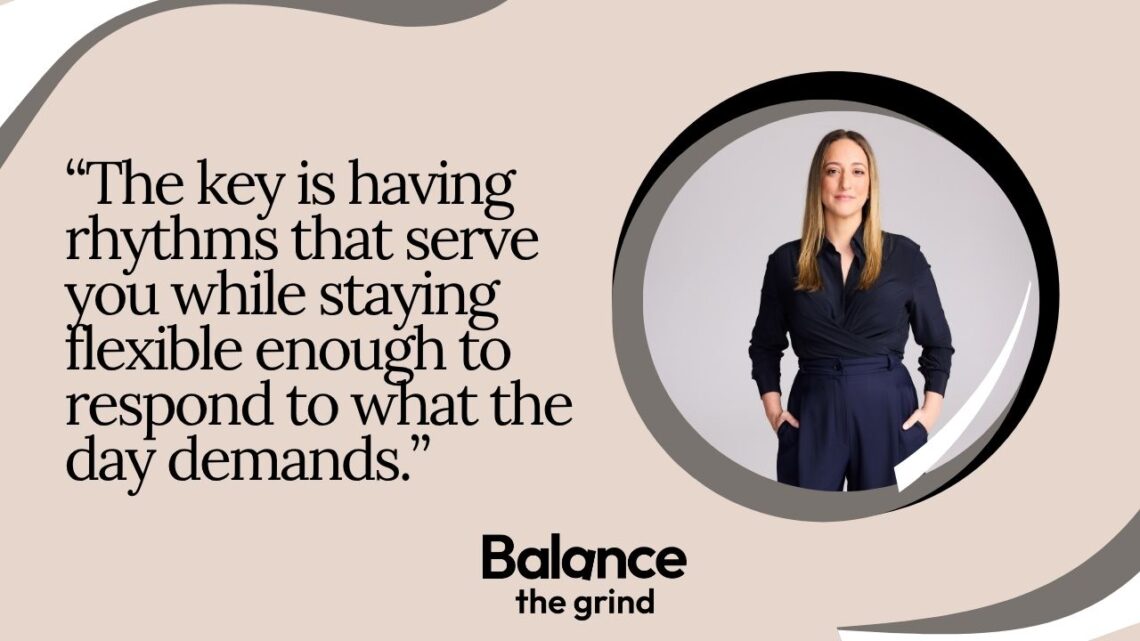
The key is having rhythms that serve you while staying flexible enough to respond to what the day demands.
What’s one underrated leadership trait that you think will matter most in the next decade—and how can people start building it now?
Empathy will be the defining leadership differentiator of the next decade, and it’s the one trait most leaders are underpreparing for.
As technology handles more routine tasks and artificial intelligence takes over analytical functions, the uniquely human elements of leadership become exponentially more valuable. While machines can process data and optimise workflows, they cannot build trust, understand nuanced human motivations, or create the psychological safety that drives high performance.
Leaders need to be intentionally developing their capacity to understand and connect with the diverse experiences, challenges, and motivations of their people. This means moving beyond surface-level check-ins to genuinely understanding what drives each person, what obstacles they face, and how to create conditions where they can thrive.
How to start building it now:
- Listening is not waiting to speak. Practice active listening in every interaction, listen to understand, not to respond.
- Regularly ask your team members about their challenges and genuinely care about the answers
- Share your own vulnerabilities and challenges appropriately to model human connection
- Study the individual working styles, communication preferences, and motivators of each team member
- Make decisions through the lens of “How will this impact the people involved?”
The leaders who master empathy won’t just survive the technological transformation, they’ll be the ones people choose to follow when they have unlimited options.