
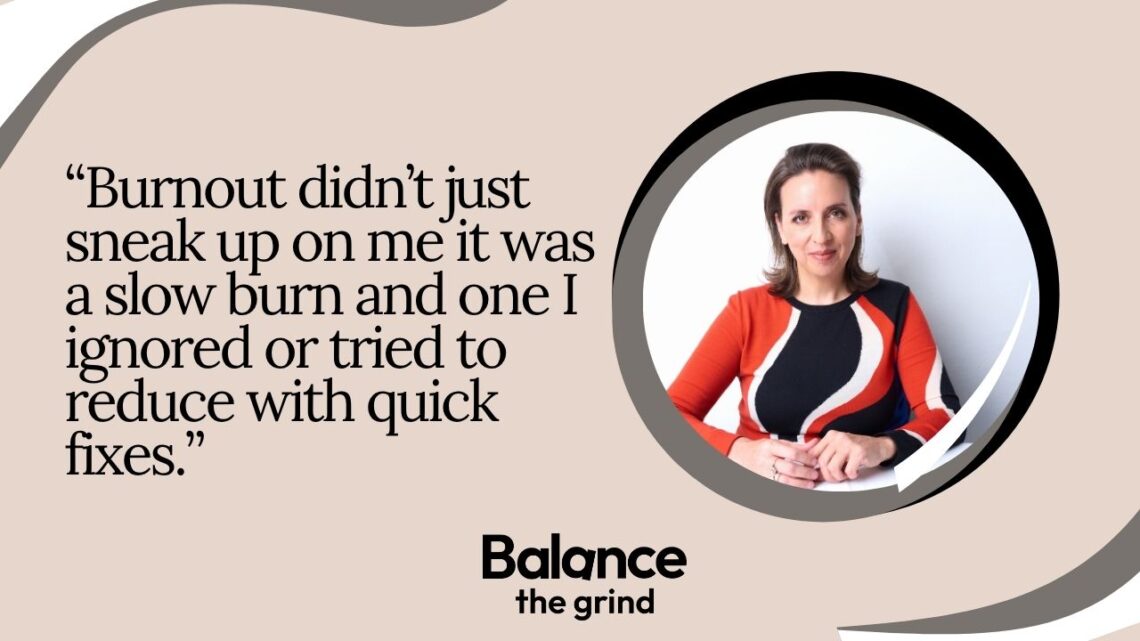

Alison Wright is the CEO of The Reach Foundation, a youth mental health organisation founded by the late Jim Stynes. Reach runs workshops across schools and workplaces, helping young people build resilience, self-awareness, and connection in a world that’s increasingly online and overstimulated. In this interview, Alison shares why she’s drawn a firm line against remote work, what burnout taught her about stillness, and how real change comes from doing the hard inner work—not just talking about it.
You’re a strong believer in the power of in-person work—especially for younger employees. What do you think is lost when teams go remote, and what have you seen shift since bringing everyone back into the office?
It’s hard to make a one size fits all approach when it comes to office time, but my experience is there is enormous value for young teams by engaging in person. The interpretation of online messaging is removed and more importantly there are ad hoc conversations and opportunities through in person environments. We’ve seen teams learn more, engage more and feel connected. When you feel connected at work anything is possible.
You’ve experienced burnout twice in your career. What changed for you after those experiences, and how do you now create space for stillness in a leadership role?
Burnout didn’t just sneak up on me it was a slow burn and one I ignored or tried to reduce with quick fixes. I learnt that a weekend away isn’t the complete antidote to adrenal fatigue and it was the splicing of a day, attention to every hour that reduces exhaustion. I still go hard at what I do because I believe I am built that way and creative or strategic energy is great to work with. I think I am now just better at calibrating on a day that has more stress than normal or in that week – but that is the longest I let it go. Creating stillness, well it certainly isn’t easy. I try to find flow through things that allow my mind to be engaged but relaxed. Painting for me is where the greatest stillness occurs. I would also add a bit of nonsense frivolous joy is often missing in the antidote to stress mix.
Reach works closely with young people navigating huge social and mental health pressures. What’s one trend you’re seeing among youth right now that more workplaces or adults should be paying attention to?
I think we have become much better at talking about mental health, but I am not sure the “doing” is happening and by that, I mean what are we engaging in to solve mental health pressures. I often refer to Reach workshops as “the work” where you learn to sit in uncomfortable spaces and discover things about yourself in a group. There is a great power in that work and I think we need to pay more attention to what we are funding – sure there is a need for crisis services but shouldn’t we be investing in prevention?
You’ve spoken about the danger of selling home ownership as a universal goal. How do you think this narrative is impacting the mental wellbeing of young Australians—and what alternatives should we be talking about?
I think we place enormous pressures on young people to have life sorted long before they need to (what is sorted anyway?). From study choices to what success looks like in a job, we are not communicating that life is messy and very few of us have a strong sense of self in our teens and know what we want to do in life, and that’s ok. I watch young people fret about owning a home in their early 20’s and feel like we have lost the important message on discovering who you are through different ages.
As a CEO, how do you model boundaries—like not working past 6pm or leaving your laptop at work—for your team in a culture that often glorifies constant availability?
Boundaries on work are relatively easy with new laws. I no longer contact my team past 6pm or before 8am and the world keeps turning. It has taken me about five years of practicing switching off to now doing that guilt free (thank goodness). We don’t glorify constant availability and as a result if I need something out of hours the Reach team knows my contact is considered and it is important. I never work on holidays. Golden rule and learnt that the hard way.
When it comes to engaging young men who are exposed to harmful online influences, what’s been most effective in helping them shift toward empathy and connection?
I would say it isn’t just young men who are exposed to harmful online influences. We are tapped in with high connectivity at any point in the day or night and that just opens us up to negative influences. Young people need more than just positive role models; they need a tool kit that starts with self-awareness. The tool kit is a set of skills and abilities to reflect knowing they can act positively and powerfully.