

Gareth Boyd has spent the past decade turning digital ideas into scalable, sustainable businesses. As Head of Growth at CreditCardCompare.com.au—and a co-founder behind Boyd family ventures like Finty and Boyd Hampers—he’s carved out a unique path that combines SEO savvy with long-term thinking.
Based on the north coast of Northern Ireland but working Australian hours, Gareth’s lifestyle isn’t typical, but it’s intentional. He’s built a career around deep work, lean teams, and digital assets that run while he sleeps. In this interview, Gareth opens up about managing burnout, staying focused across time zones, and designing a work life that supports personal freedom—not just hustle.
You’ve been building digital businesses for over a decade, what does a typical day look like for you now, and how do you stay focused across so many projects?
A typical day’s a bit of a whirlwind, but I’ve got a routine that I try my best to stick to which usually keeps it all on track, but it’s really an art of juggling and prioritising tasks or delegating other tasks out. Since I’m currently based on the lovely north coast of Northern Ireland, (just imagine Bondi with zero sun and 99% rain), and working with teams in Australia and Singapore, I’m up early at around 5 a.m. UK time to keep aligned with Aussie hours.
I start each day with copious amounts of coffee and a quick look at emails and project dashboards. I’m juggling SEO, affiliate marketing, e-commerce, and publishing, so I use tools like Trello and Slack to keep everything straight. My day’s split into blocks: mornings for strategy and calls, afternoons for hands-on stuff like content or SEO tweaks, and evenings for Singapore catch-ups.
Staying focused is all about prioritising, thankfully we have got a great team who handle the nitty-gritty, so I can zoom out and focus on what’s next. Then I will find myself up to the early hours of the morning sometimes thanks to the Australian crossover. Sometimes it feels like I’m operating on 2-4 hours sleep!
Working Australian hours from the UK sounds like a logistical challenge, how do you manage your energy and structure your day to avoid burnout?
It can be very difficult, as you can imagine! The time difference means I’m often working when others are winding down, so structure’s my lifeline. However I do have non-negotiables: family time, a bit of exercise, and try to get as much sleep as possible. I usually ‘finish’ off work by 7 p.m. UK time, have late dinner with the family, then maybe do a quick check-in with Singapore and Australia before calling it a night.
I batch tasks, like grouping all my calls or meetings together, so I’m not bouncing between things all day. Short breaks help too, even just a stroll outside. Saying no to low-value stuff keeps me sane, but if a friend calls up to go for a quick beer, I find it very hard to say no! It’s about discipline and motivation, without either, you’re not going to make it.
You’ve helped relaunch CreditCardCompare, what were some key decisions or strategies that made the biggest difference in that process?
For CreditCardCompare.com.au, we went hard on SEO so we could kickstart organic traffic which is the most natural and cost effective way to grow any business at the start, let alone a bootstrapped relaunch! We landed some big backlinks thanks to our SEO agency, Forte Analytica, spruced up the content to make it more user-friendly, and got the site running fast and smooth on mobiles.
User experience was massive too, we took apart old features and streamlined the comparison tool so people could pick a card and compare it side-by-side with others. Since most of the big banks know of CCC, getting calls arranged to partner with big banks for exclusive offers gave us an edge. But the real changing point was data and implementing it with AI to see what users wanted and tweaking the site on the fly. That’s what turned it around.
You talk a lot about “digital assets that work while you sleep”, can you unpack what that means for you and how you approach building them?
Love this question! “Digital assets that work while you sleep” are my bread and butter. It’s about creating a product or service that doesn’t need me heavily involved 24/7 or the ability to quickly outsource workload or hire someone to take over the day to day tasks. I focus on evergreen niches, whether it’s content or products, as long as they don’t date quickly.
With SEO, I’ll build pages that rank for years; with affiliate marketing, I set up funnels that tick over on their own. Automation’s key with email sequences, AI chatbots, you name it. You’ve got to put in the grunt work upfront, then tweak it occasionally. It’s not set-and-forget, but it’s the nearest you’ll get. A great example is our business Boyd Hampers, it runs completely by itself now, all we do is check in on customer support, marketing channels and overall management.
You’ve worked across SEO, affiliate marketing, publishing, and e-commerce, how do you decide what to pursue next or where to focus your energy?
It’s half ideation, half gut feeling. I dig into the data with market trends, competition, and how much return I’ll get for my investment of time. If there’s a gap I can fill with my skills, I’m in. But it’s not just numbers, I have to feel it too. If a project sparks my interest or fits my goals, I’ll give it a crack. It took a long time to learn and master the urge of chasing every shiny new thing.
What I try to do instead is lean on what I’m good at and never ignore your gut feeling. If you have a strange gut feeling, then chances are it’s your body telling you something. One of the best ways you can get started is to find an easy market to enter in, something that a competitor is doing poorly and simply do it better, but fast. The saying of “move fast and break things” stands true to this.
What advice would you give to someone trying to design a career around freedom, especially in a world that often glorifies hustle over balance?
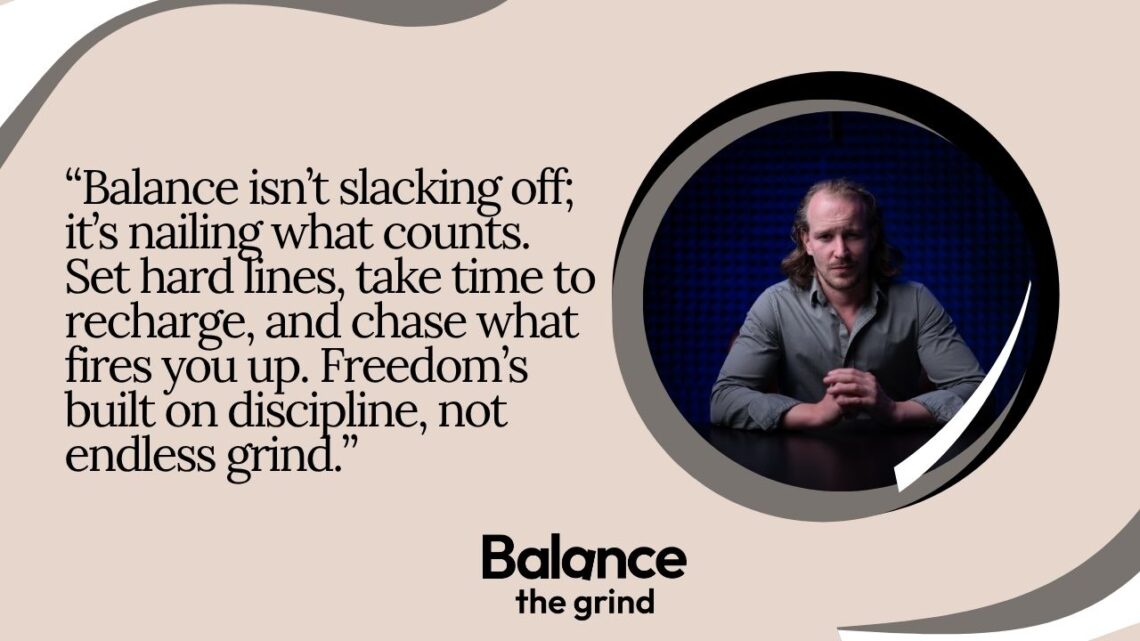
My tip is to build systems that do the heavy lifting and find what you’re great at and just so happen to love doing, then figure out how to make it pay without chaining you to a desk. Passive income like affiliate sites or digital products is gold. Automate what you can, outsource the rest, and don’t be scared to delegate. Say no to stuff that drags you off course. Balance isn’t slacking off; it’s nailing what counts. Set hard lines, take time to recharge, and chase what fires you up. Freedom’s built on discipline, not endless grind. But having said that, you cannot expect to be successful in any area of life without little input of energy and sacrifice.